The case for the terrace
Density, sociability and the North West’s most underrated way to house people.
Ali Siddique
If you grew up in the North West, there is a good chance you grew up in a terrace. Rows of two-up, two-down brick houses still make up whole neighbourhoods of Manchester, Liverpool, Rochdale and Oldham. For much of the twentieth century they were treated as a problem to be cleared. I think they are one of the best answers we have.
Dense without being tall
A terrace packs a lot of homes onto a small amount of land. Each house has its own front door on the street, often a small yard or garden behind, and shares its side walls with its neighbours, which keeps it warm and cheap to build. A street of terraced houses can house as many people per hectare as a block of flats, without a lift, a long corridor or a shared stairwell in sight.
That matters. One of the biggest challenges in housing now is how to build enough homes in towns and cities without sprawling across green fields or stacking everyone into towers. The terrace sits right in the middle of that problem, and has been quietly solving it for two hundred years.
Front doors make streets
The other thing a terrace does is make a street. Every house has a front door facing the pavement. People come and go, see each other, stop to talk. Windows look out over the street from both floors. It is the kind of everyday sociability that is very hard to design into an apartment block, where the front doors are all hidden along an internal corridor.
The terrace now
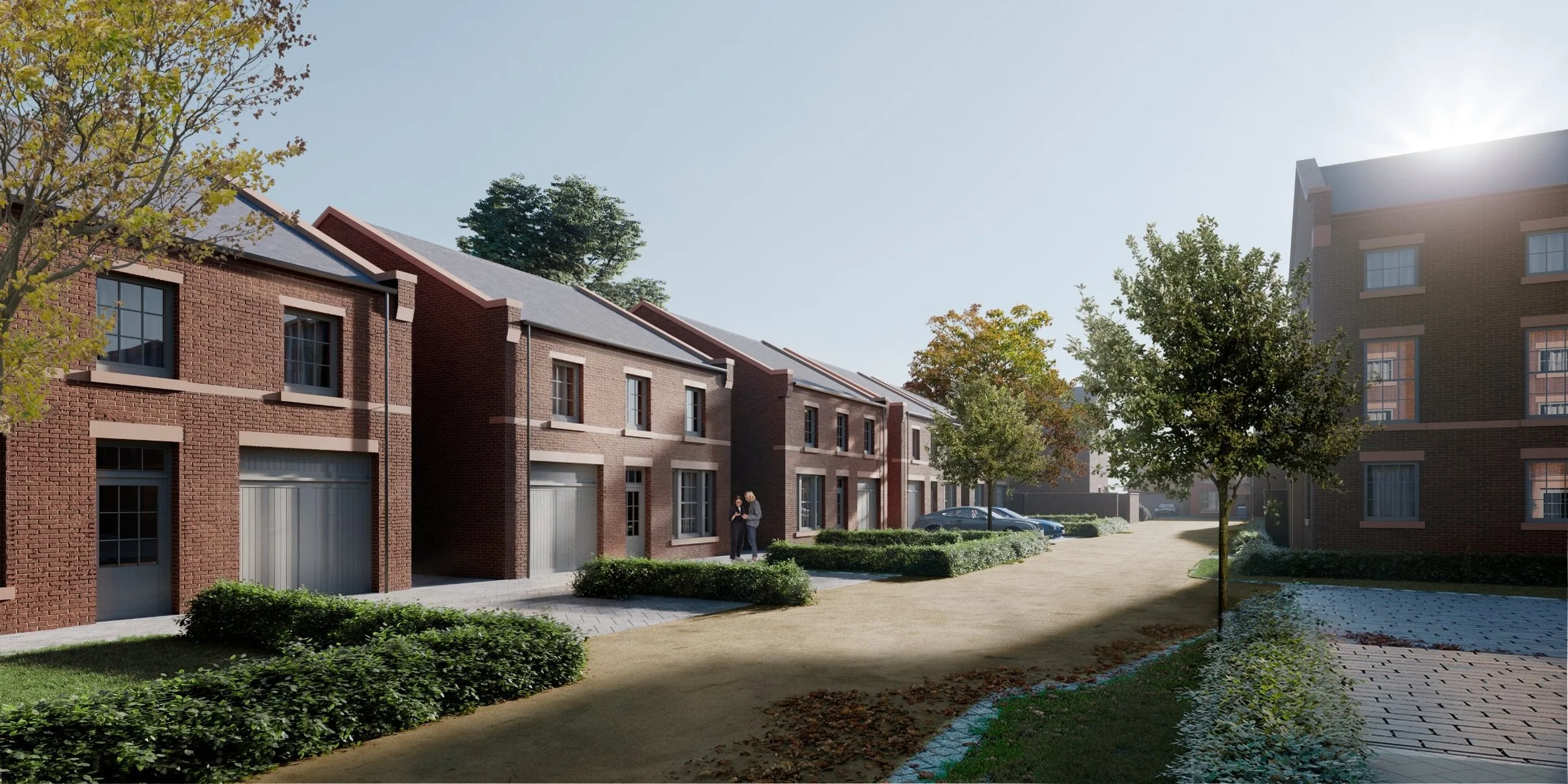
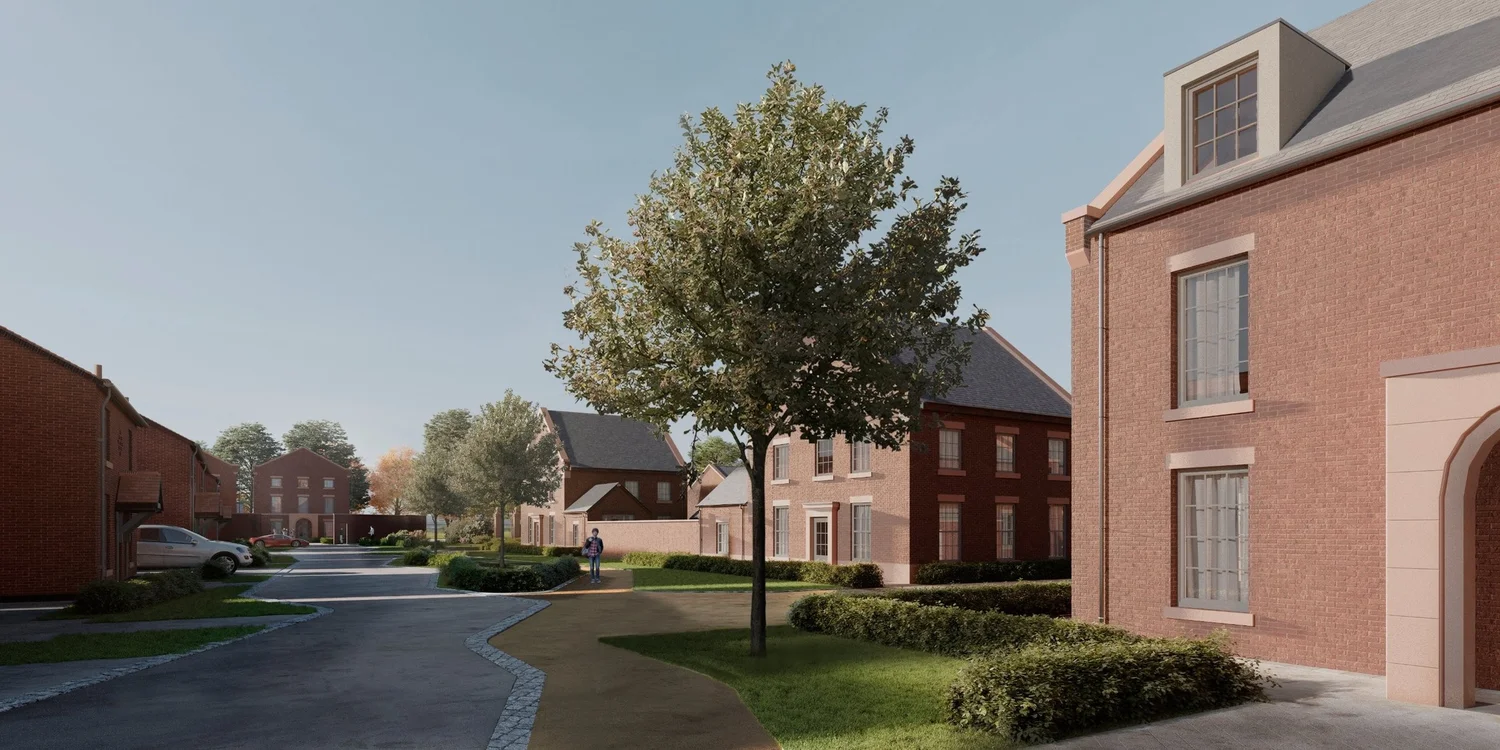
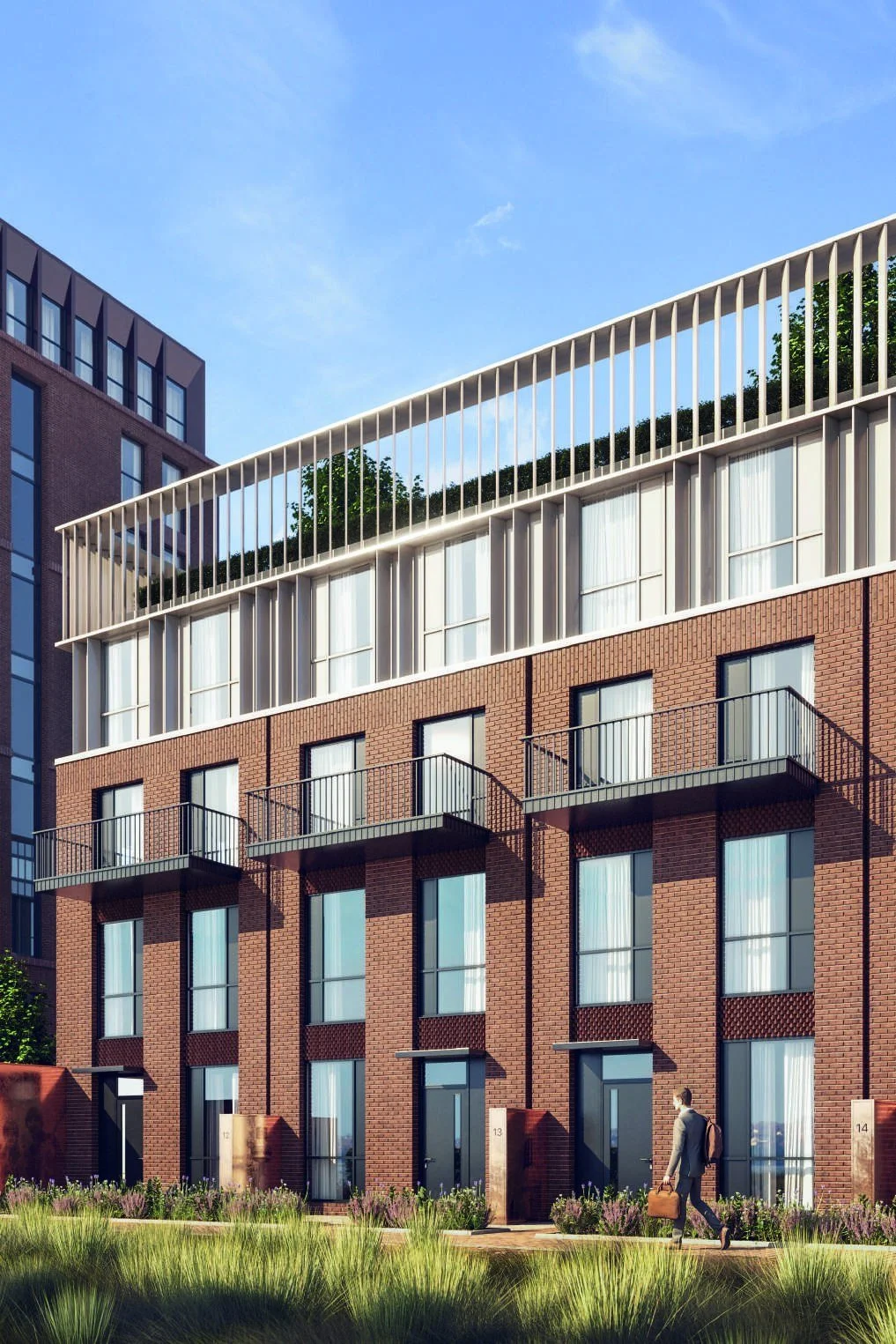
I have found myself returning to the terrace again and again, in different forms. On Alderley Park, a development of about fifty family houses in Cheshire, the houses are arranged as streets and mews with front doors, gardens and a clear line of fronts, drawing on the traditional houses of the estate. On West Waterloo Place in Liverpool, part of the scheme is made up of two-storey duplex townhouses with their own front doors and gardens, a new take on the terrace set within a larger building.
Even on Duke Street, a narrow plot in the Ropewalks, the instinct is the same: give the building a clear front on the street, a door you can find and a face that adds to the row rather than standing apart from it.
Not nostalgia
The case for the terrace is not nostalgic. The Victorian back-to-backs were often damp, dark and overcrowded, and nobody wants them back. But the type itself, the house in a row with a door on the street, is remarkably adaptable. It can be built with modern insulation and good daylight. It can step in height, turn corners and wrap around a garden. It can be a family house, a set of flats or a mix of both.
Getting the details right
Of course, a terrace only works if it is done well. The best old terraces have a few things in common. The fronts line up, so the street has a clear edge. The doors and windows are in a steady rhythm, with just enough variation to make each house feel like a home rather than a unit. There is a small threshold between pavement and front door, a step, a low wall or a strip of garden, that gives a bit of privacy without turning the house away from the street.
New terraces can learn all of that. They can also improve on the old ones: deeper plans with more daylight, proper storage, space for bikes and bins that does not clutter the front, gardens that work for families, and walls and roofs built to modern standards so they are warm and cheap to run.
Parking is usually the hardest part. Too many new housing schemes are laid out around the car, with fronts set back behind driveways and streets that feel like car parks. The best answers I have seen keep the cars to the side, in short runs or small courts, and let the houses meet the street directly.
There is a reason terraced streets are so popular when they come up for sale, and why the most sought-after neighbourhoods in many northern towns are rows of Victorian houses. People vote with their feet. The type works, and it keeps working long after many newer housing forms have been knocked down.
Above all, it is a form people understand and like. Ask most families what they want and they will describe something very like a good terrace: a front door, a bit of garden, neighbours you know, a street you are part of. We could do a lot worse than to give them exactly that.
Related projectsAlderley Park · West Waterloo Place · Duke Street