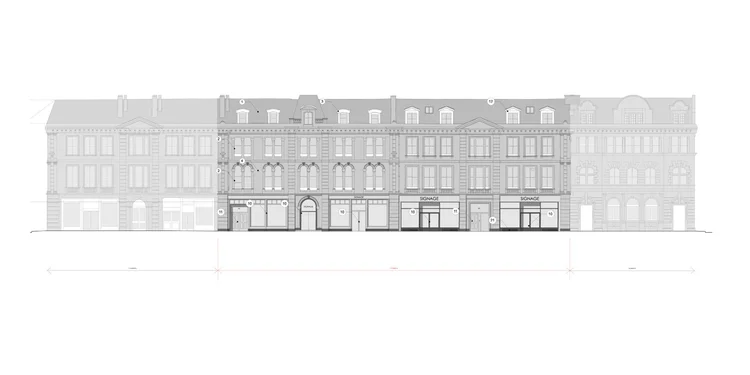
Bringing the Garrick’s corner back to life
How do you give an empty Art Deco theatre on Lord Street a future without losing what made it special?
Ali Siddique
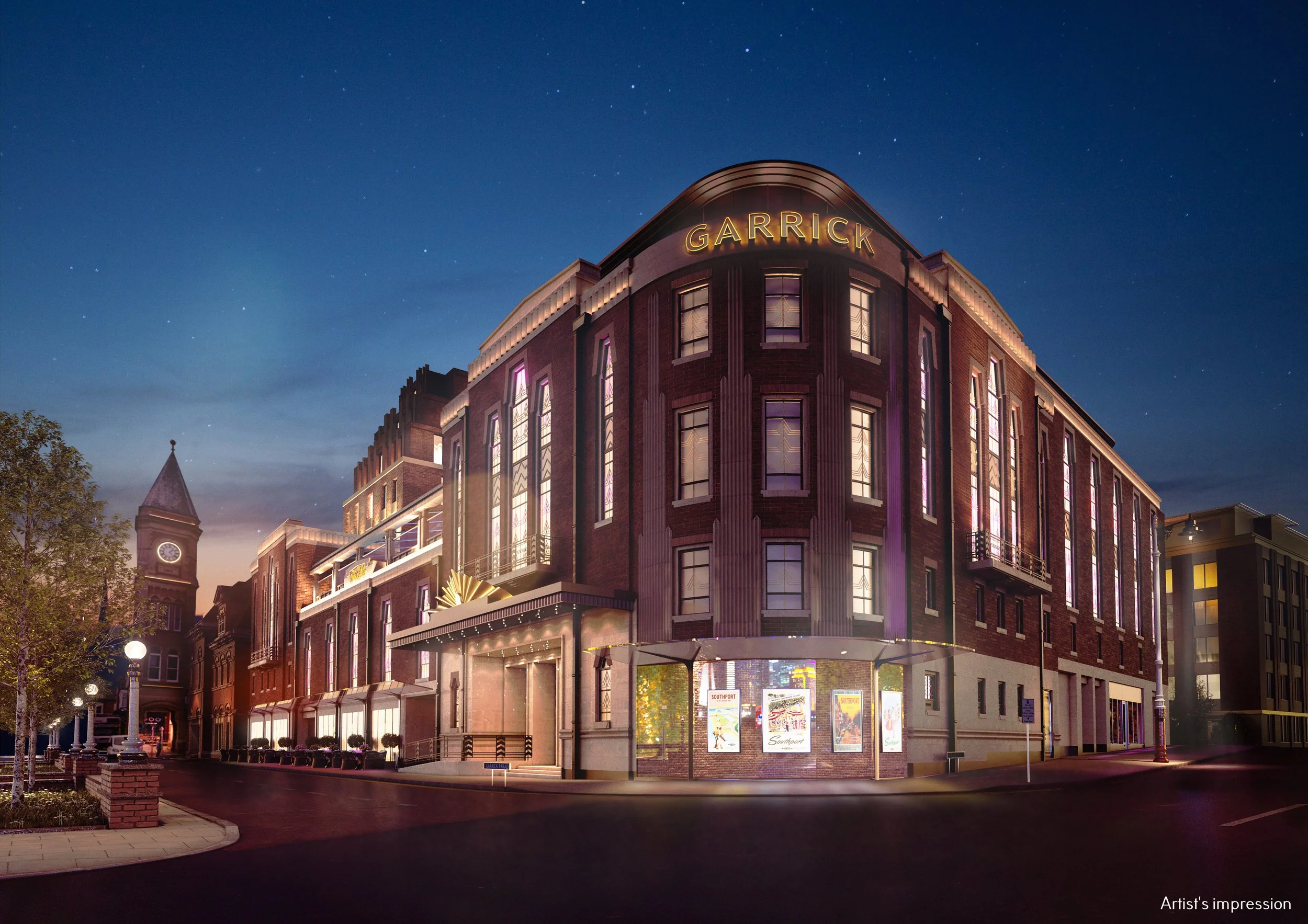
Some buildings are landmarks because they are big. The Garrick Theatre in Southport is a landmark because of a corner. Where Lord Street meets Kingsway, its two brick fronts do not meet at a sharp angle. They sweep round in a single elegant curve, with tall windows between Art Deco pilasters. Anyone who knows Southport knows that corner.
For years, though, the building behind it had been empty. Once a theatre with seating for 1,500, it had last been used as a bingo hall before being left in poor repair. It is Grade II listed and sits in the Lord Street Conservation Area, so whatever happened next had to respect it.
Reading the building
Before we drew anything, we spent a long time understanding what was there. We surveyed the building room by room, recording what survived from the original theatre and what had been lost or altered over the years. The large foyer, the double staircase and the auditorium, which once held stalls, a circle and eight stage boxes, were still recognisable beneath decades of later use.
That survey shaped everything that followed. It told us which spaces were strong enough to carry new uses and which could change more freely. It told us where the building's character really lay: not just in the facade, but in the sequence from the street, through the foyer and up the stairs into the great room at its heart.
It also helped in conversations with the council and heritage advisers. When you can show that you understand a listed building in detail, and that your proposals grow out of that understanding, the discussion changes. It becomes about how best to look after the building, rather than whether you can be trusted with it.
Keeping the heart
The temptation with a building like this is to keep the front and gut everything behind it. We wanted to do the opposite: keep the old auditorium at the heart of the building and give it a new life as a large event space, with a stage and a bar, and then fill the rest of the building around it.
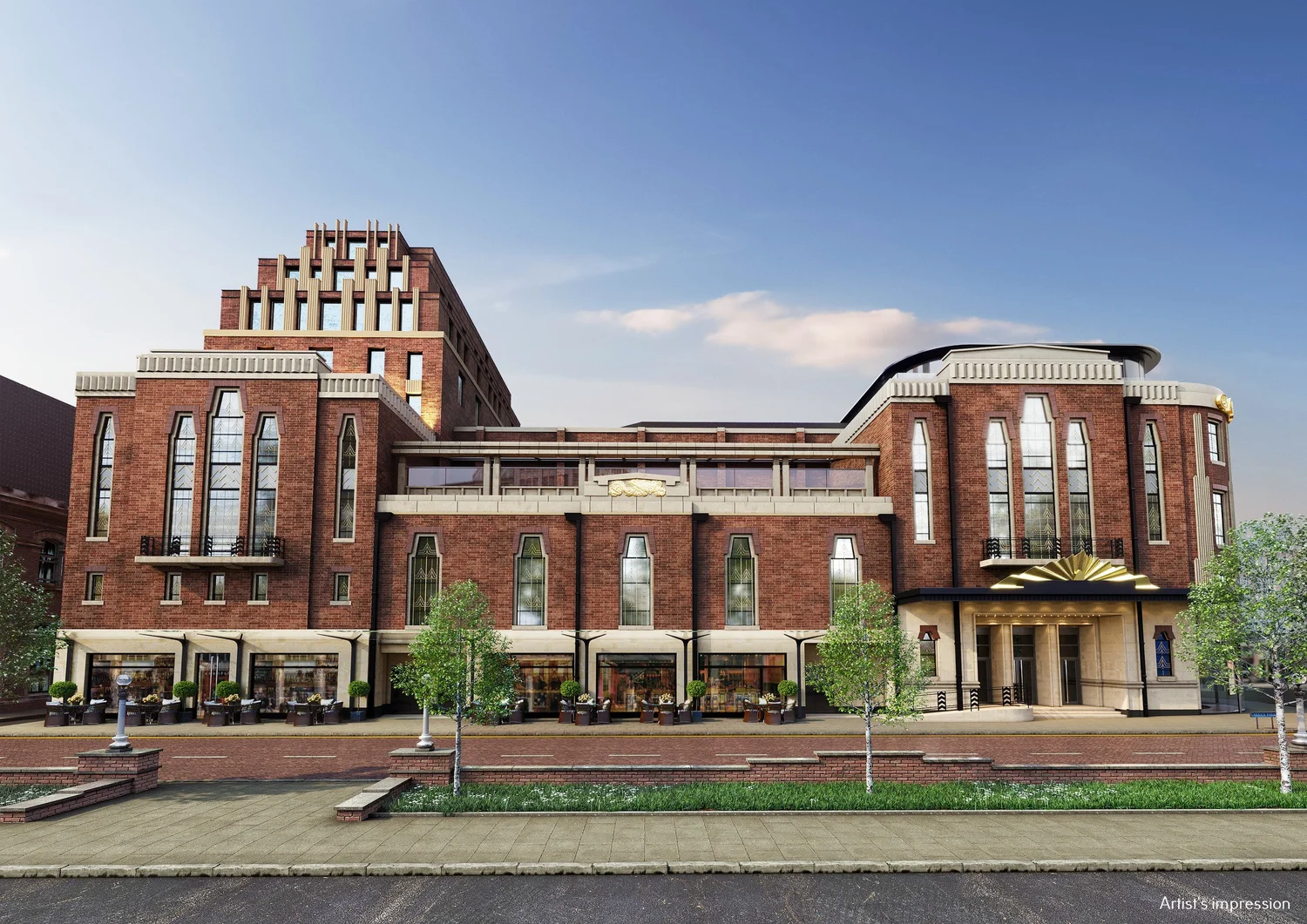
A hotel takes the upper floors and the roof space. A pool and spa go into the basement. Apartments line one side, and shops return to Lord Street at ground level. A new brick extension rises at the back, stepping in as it climbs so that it sits behind the historic fronts rather than competing with them.
The corner
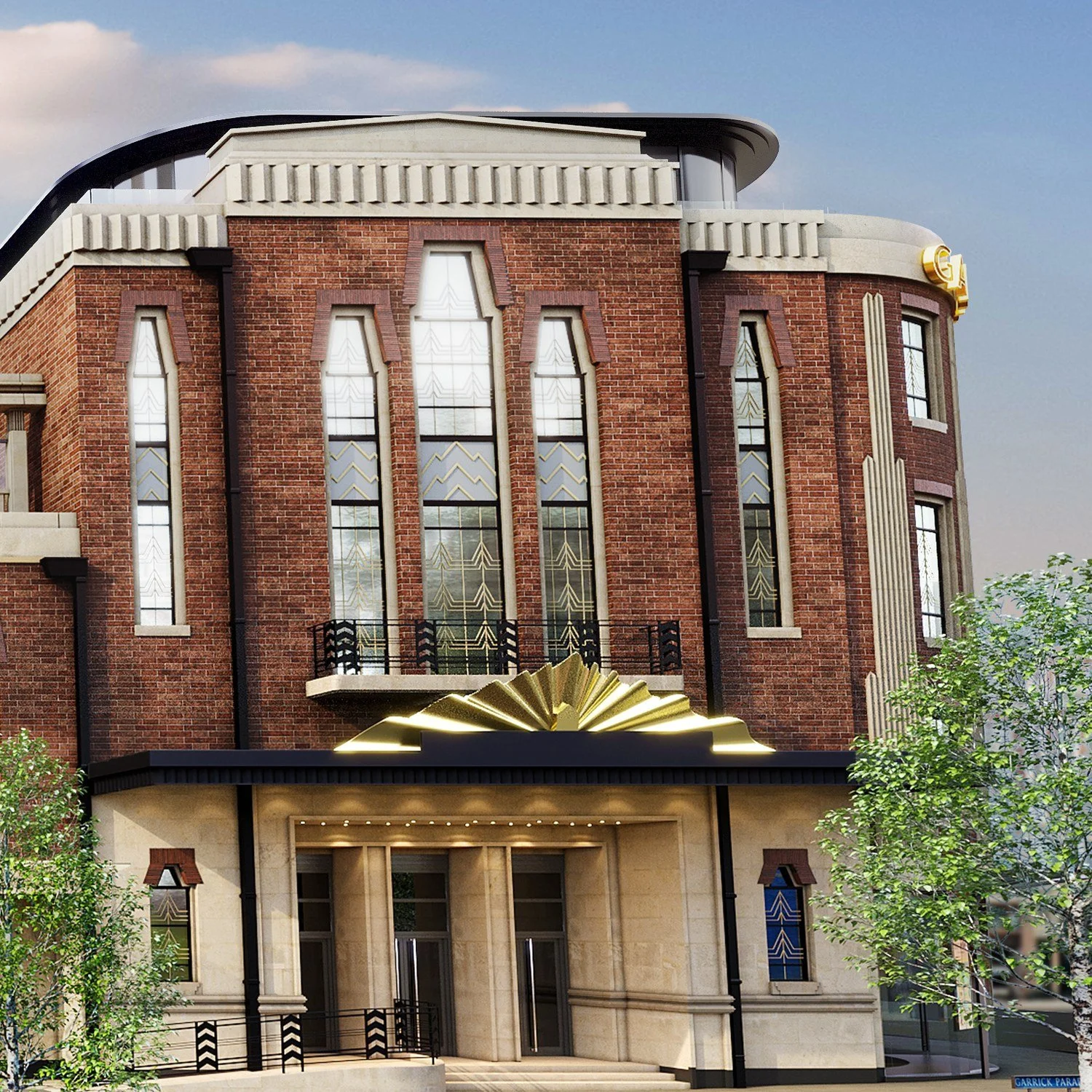
Outside, the work is about repair. Brickwork made good, windows and doors repaired or replaced after a full survey, and a new canopy to mark the entrance on the curved corner. The Garrick name returns to the top of the facade, lit at night, so that the building reads once again as one of the town's landmarks rather than a shuttered shell.
Why it matters
Seaside towns have lost a lot of their great buildings: piers, pavilions, theatres and cinemas that were too big or too expensive to keep. Every one that goes takes a piece of the town's identity with it. The Garrick is too good to lose. If a mix of hotel, homes, events and shops can keep it lit, warm and in use, that is a far better outcome than another empty landmark waiting for a fire or a bulldozer.
A mix that pays its way
The mix of uses is what makes the scheme possible. A theatre of this size is very hard to run on its own, which is a large part of why so many have closed. By combining an event space with a hotel, apartments, a spa and shops, the building can earn its keep across the week and across the year, rather than depending on a handful of performances.
Each part supports the others. Hotel guests use the event space and the spa. Events bring visitors who stay in the hotel and eat in the town. Shops on Lord Street bring life to the street at ground level. And the income from all of them pays for the careful repair of a building that would otherwise keep slowly falling apart.
It is a pattern I think we will see more and more with large historic buildings: not a single grand use, but a carefully balanced mix that keeps the building busy and the lights on.
The corner was always the Garrick's gift to Lord Street. The aim of the project is simple: to make sure it is still there, and still full of life, for the next generation.
Related projectsGarrick Theatre