Brick, patience and the Manchester street
Why the humblest material in the North West still has the most to teach us about building cities that last.
Ali Siddique
Walk down almost any street in Manchester, Liverpool or Oldham and you are walking between walls of brick. Mills and warehouses, terraces and chapels, banks that became bars and bars that became flats. Brick is so ordinary here that we stop seeing it. But I have come to think it is the most instructive material we have, and the one that most of my work keeps returning to.
Part of that is practical. Brick is made from the ground the city stands on. It is small enough to be laid by one person's hand, which means a wall can turn a corner, step back, open up for a window or close down for a chimney without anything special having to happen. It weathers rather than wears out. A brick building that is looked after will still be standing long after the people who paid for it are forgotten, and it will usually look better for the time it has had.
But the deeper lesson is about patience. A brick wall is built a course at a time. You cannot hurry it much, and you cannot hide much in it either. Every decision shows: the bond, the colour of the mortar, the depth of a reveal, the way a sill meets the jamb. When it is done well, you feel it as you walk past, even if you could not say why. When it is done badly, you feel that too.
The street as the client
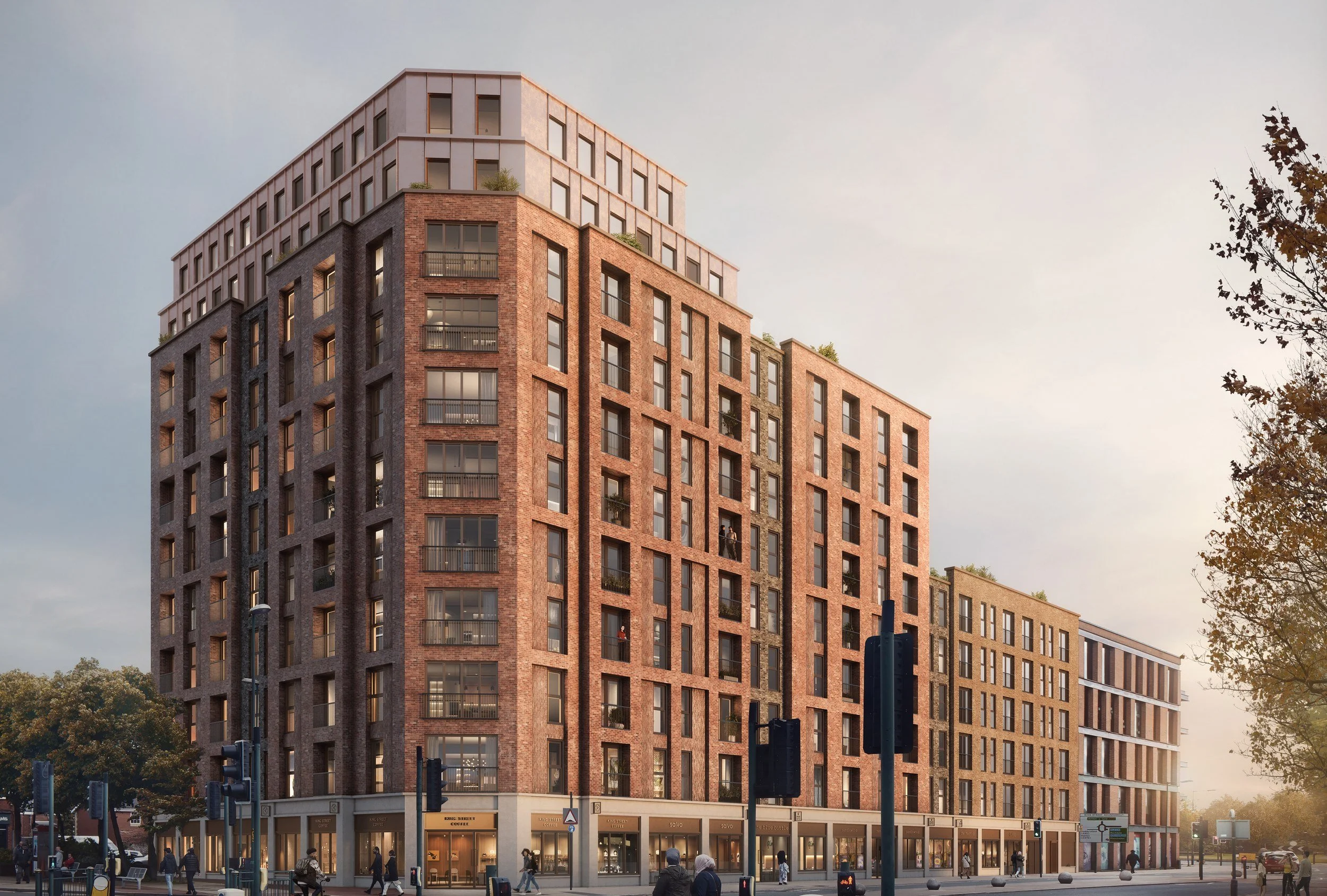
On a project like King Street in Oldham, a large building on a town-centre street, the first question is never really what the building looks like. It is what the street needs. Where are the doors? How does the ground floor meet the pavement? Where does the building need to be quiet, and where can it be generous? Brick helps you answer those questions, because it pulls you back towards the things that have always made streets work: a solid base, windows in rhythm, a clear line where the building meets the sky.
The North West's best streets were not designed by one hand. They were built up over decades by lots of owners, each putting up something a little different, held together by a shared material and a shared sense of how a building should behave in public. I find that a much more useful guide than any single style. The aim is not to copy a Victorian warehouse. It is to make a building that a Victorian builder would recognise as doing the same job.
Slow decisions, fast programmes
None of this is easy on a modern project. Programmes are tight, budgets are tighter, and brick is often the first thing to be value-engineered into a thin slip or a printed panel. I understand why. But I have learned to argue for it early, and to argue for it in terms that a client and a contractor care about: lifespan, maintenance, how a building will be seen by the planning committee, and how it will be seen by the people who live in it ten years from now.
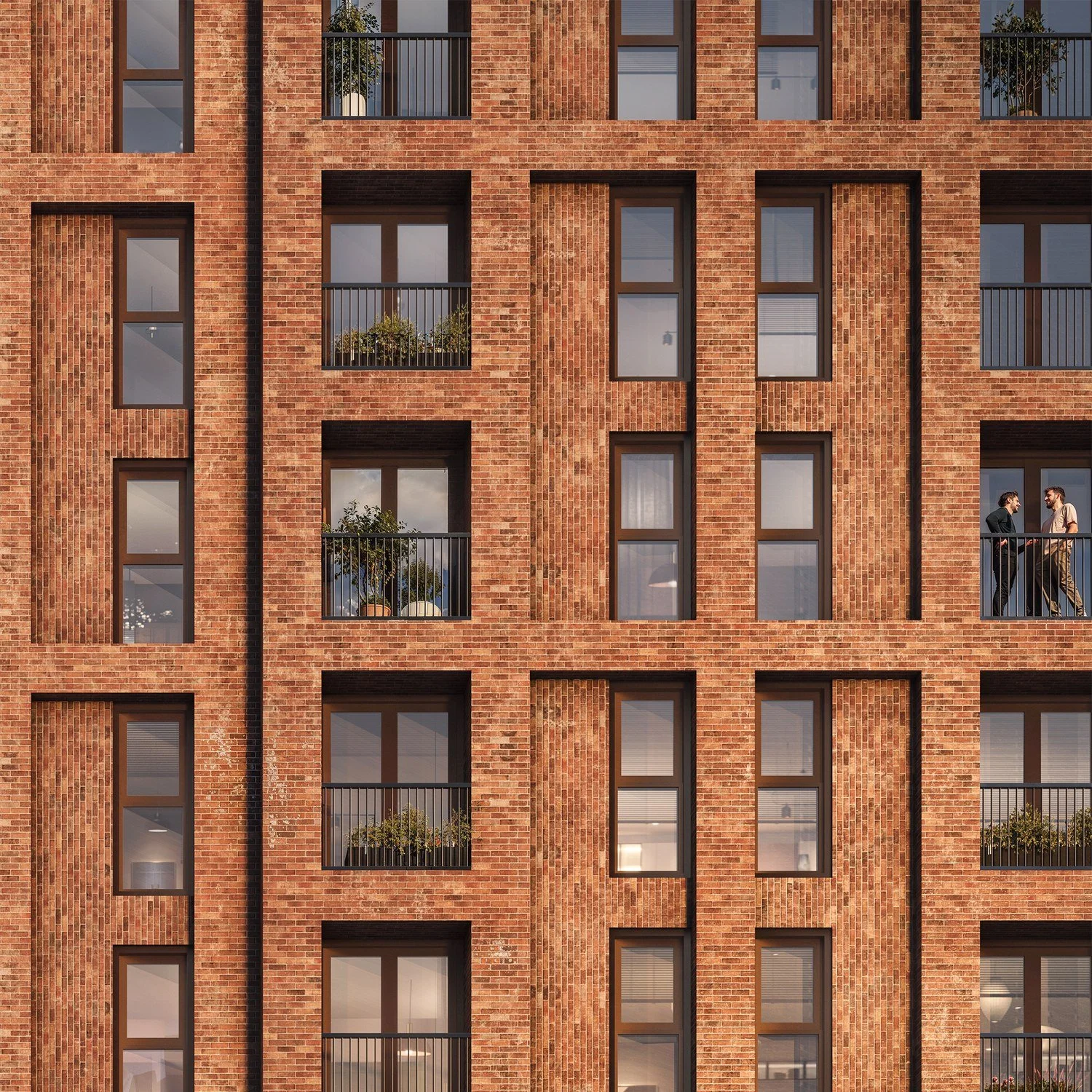
The detail that matters most is usually not the expensive one. It is the depth of a window reveal, so the glass sits back in the wall and catches a shadow. It is a soldier course or a band of contrasting brick at the right height, so a tall building still has a human-scaled base. It is choosing a brick and mortar that will age together, rather than one that looks perfect in a sample panel and tired in five years.
What lasts
Learning to read a wall
One of the best habits I picked up early was simply to look at walls properly. Not the whole building, but the wall: how the bricks are laid, where the joints run, how a lintel is made, what happens at the top and the bottom. Old warehouses in Manchester and Liverpool are full of small, clever decisions, often made by builders rather than architects, that solved a problem neatly and then quietly lasted a hundred and fifty years.
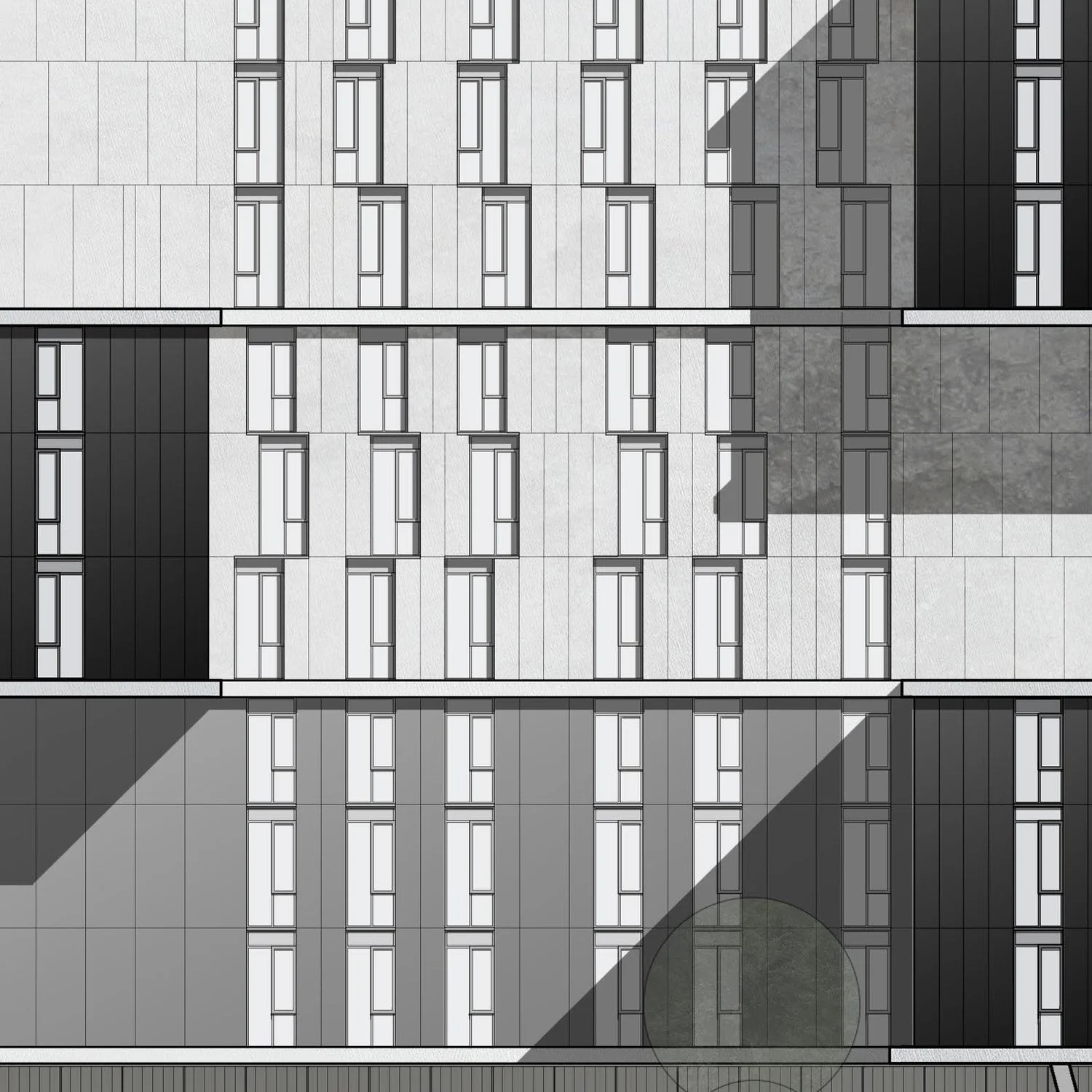
You learn a lot from that. You learn that a slightly deeper reveal changes the whole character of a facade. You learn that a plinth of harder, darker brick protects the base of a wall from splashing rain and makes the building look grounded at the same time. You learn that good proportions can carry a very plain building, and that no amount of decoration can rescue bad ones.
I sometimes think about the warehouses that once lined the docks in Liverpool, most of them long gone. The ones that survive did not survive because they were precious. They survived because they were useful, because they were built well enough to be adapted, and because people grew fond of them. That is a good test for anything we build now. Will someone, in sixty years, want to keep it?
Brick does not guarantee that. Plenty of bad buildings are made of brick. But it gives you a fighting chance. It asks you to slow down, to think about the street before the object, and to make something that can carry the marks of time without falling apart. In a hurried age, that seems to me a very good place to start.
Related projectsKing Street · Brassey Street