A garden before prayer
Bilal Gardens: turning a patch of grass beside a Rochdale mosque into a place to pause, play and remember.
Ali Siddique
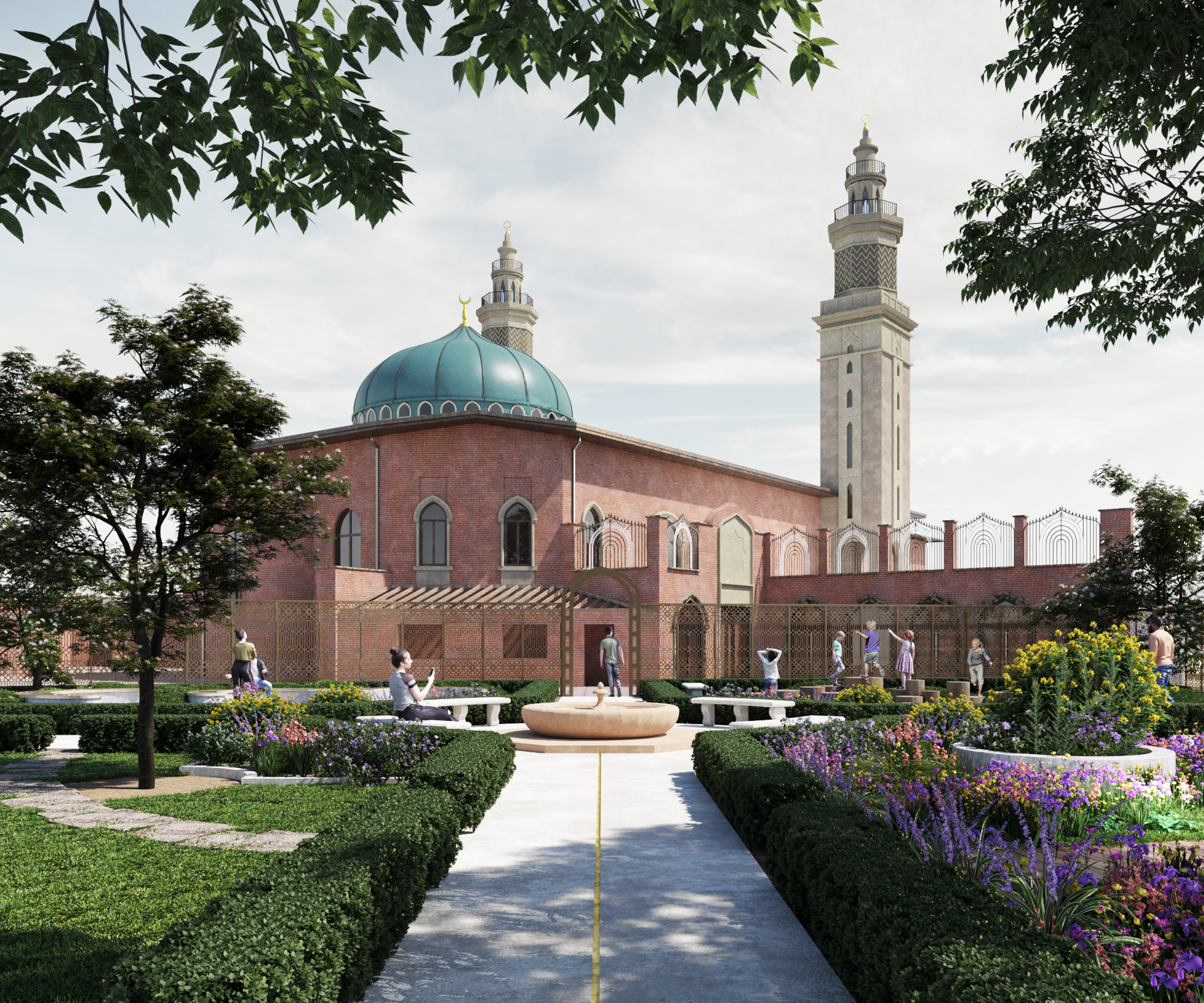
Next to Bilal Mosque in Rochdale there is a patch of grass. It belongs to the mosque, it has five good trees on it, and nobody really uses it. People cut across it on their way to prayer. Children play on it sometimes. It is not unpleasant, but it is not a place.
The brief for Bilal Gardens was simple: make it one. Give people somewhere calm to walk through or sit in before entering the mosque, and give the neighbourhood, Muslim or not, a small garden it could enjoy.
Four gardens
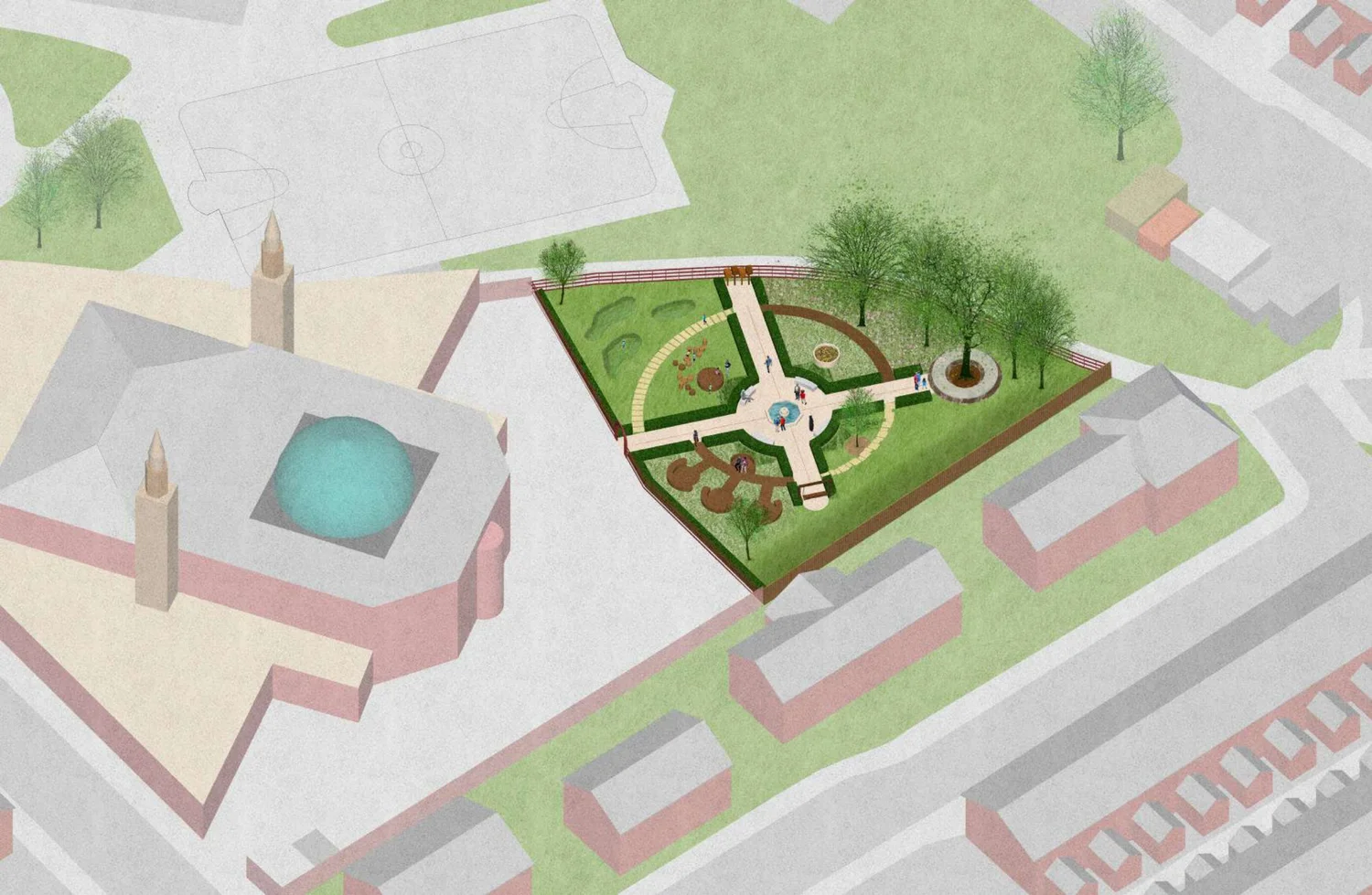
We started with the chahar-bagh, the traditional four-fold garden found across the Islamic world. Four paths meet at a small fountain in the centre, dividing the ground into four. Each of the four gardens has its own character: a seating area with curved timber benches, a reflective garden with a fruit tree and stepping stones, a flower garden planted for scent, and a play area of grassy mounds and stepping stumps.
A dark yew hedge gives the garden its geometry all year round. A circular path offers a slower route through all four. And all five of the existing trees are kept. The largest one becomes the heart of a memorial, to be designed with the community, in memory of those lost in the pandemic.
Designing with children
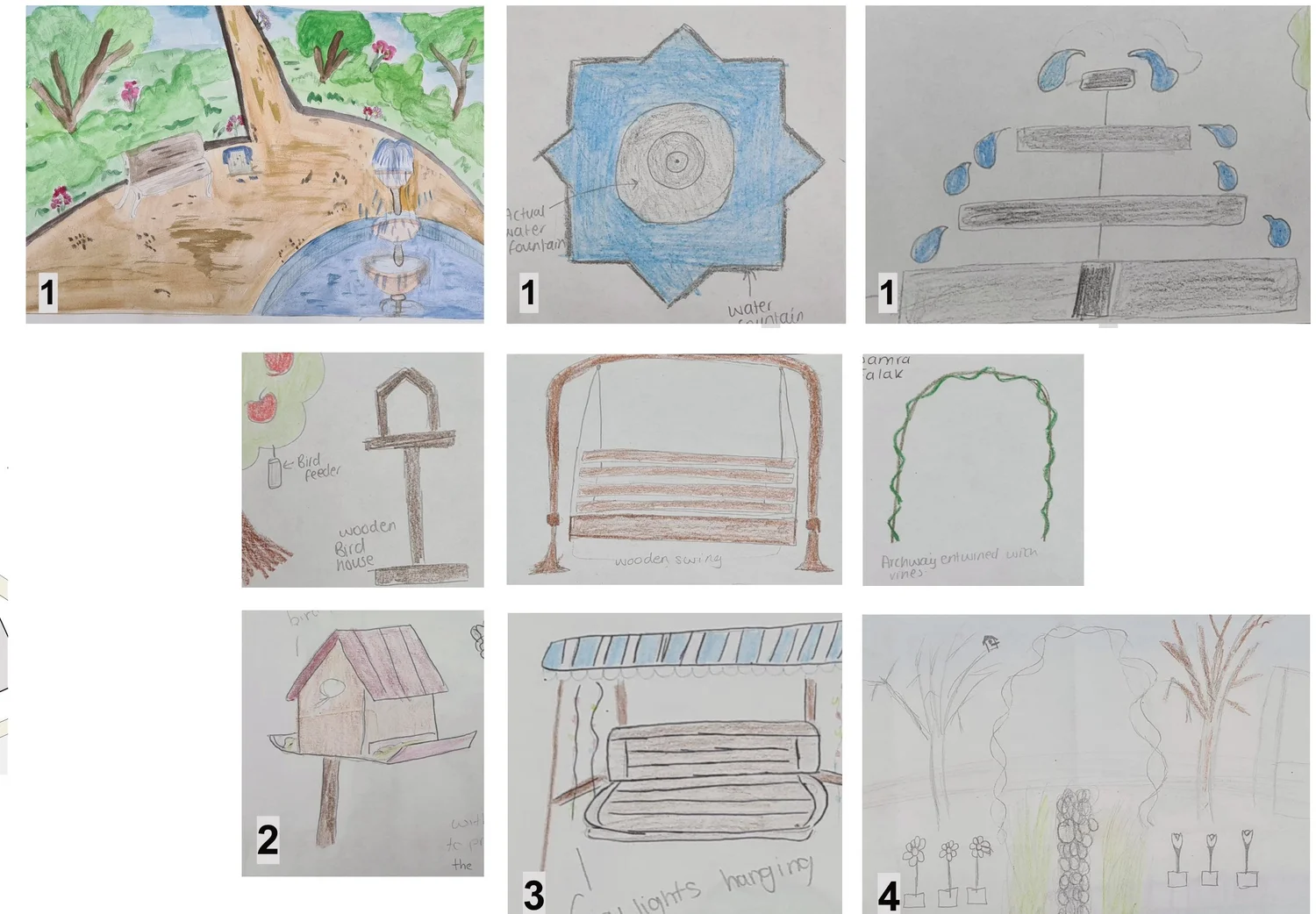
The part of this project I am proudest of is that local children helped design it. In February 2022 we held a workshop and asked them to draw the garden they wanted. We expected flowers and swings, and we got them. But we also got bird feeders, bench swings, archways and, again and again, water in the middle.
Those drawings went straight into the design. The bird feeders and the bench swing are there. The archways became the frames you walk through between gardens. And the fountain at the centre owes as much to their drawings as to any traditional precedent.
Small projects matter
Planting for the senses
We spent a lot of time on the planting. In a traditional Islamic garden, scent matters as much as colour, partly because it is so pleasurable and partly because it has such power to bring back memories. The flower garden is planted with roses, geraniums and iris, flowering shrubs such as myrtle, jasmine and daphne, and a succession of spring bulbs including narcissi and tulips, so that there is always something in flower and something to smell.
The aim was a balance of bold colour amongst plenty of green: calm enough to sit in quietly, but rich enough to lift the spirits as you walk through. Around the edges, denser planting deals with the changes in level and softens the boundaries with the houses next door.
The reflective garden is quieter still. Irregular stepping stones, long grasses and wild flowers are laid out in a looser, more natural way, so that it feels like a place to walk slowly and think. Next to it, a fruit tree, a familiar feature of Islamic gardens, will in time give shade and fruit.
A garden for the street
The garden sits between the mosque and a row of houses, with a small park to the north-east. That position matters. It is not a private courtyard hidden behind walls, but a garden on a residential street, seen every day by neighbours who may never go inside the mosque. We wanted it to feel like a gift to the street as much as a forecourt to the building, open, green and welcoming to anyone passing.
Bilal Gardens is a very small project, about 770 square metres. It will never win the kind of attention that a tower or a museum does. But I think small projects like this are where architecture does some of its most important work. They change how a place feels day to day. They give people a reason to stop. And when they are made with the people who will use them, they belong to those people in a way that larger buildings rarely do.
A garden before prayer is, in the end, a garden for everyone: somewhere to pause, to sit in the shade of a tree, and to arrive at the mosque a little calmer than you left home.
Related projectsBilal Gardens